Website Design for Small Business Near Me
Need website design for small business near me? Learn what to look for in a local agency and how the right site can bring more leads and sales.
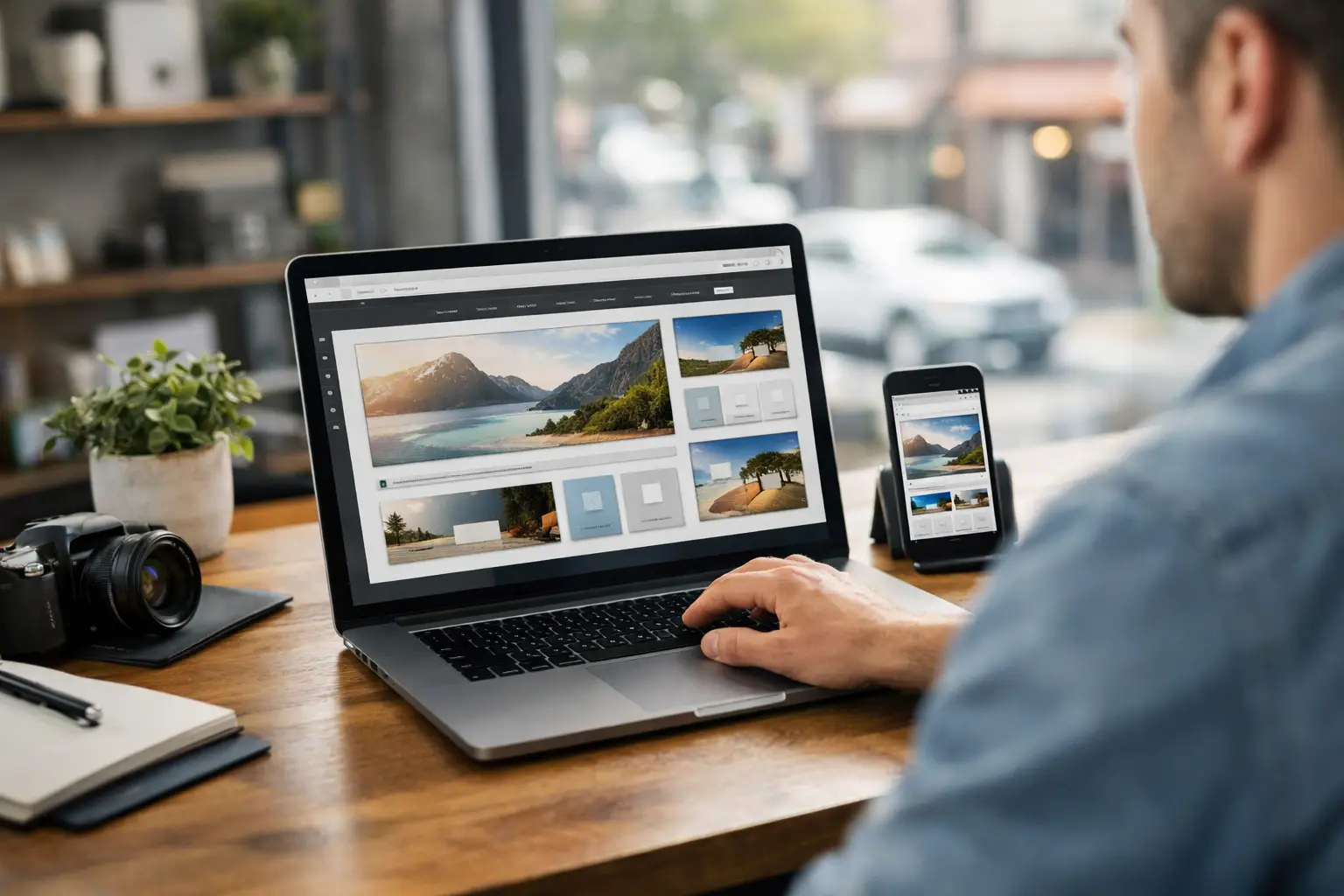
If you have ever typed website design for small business near me into Google, you were probably not looking for a trendy homepage. You were looking for a business result. More enquiries. Better visibility. A site that works properly on mobile. And ideally, a local team that understands your market and picks up the phone when you need help.
That is the real issue for most small businesses. The problem is rarely that a website looks old on its own. The problem is that it stops pulling its weight. It loads slowly, sits too far down in search results, or makes it harder than it should be for customers to get in touch. When that happens, redesigning the site is not a cosmetic job. It is a commercial decision.
What does good website design for small business near me actually mean?
For a small business, good web design is not about adding every latest feature or chasing design fashions. It is about building a site that helps people trust you quickly and take the next step. That could mean calling, filling in a form, visiting your premises, or requesting a quote.
A good local business website needs to do a few things well at the same time. It should look professional, but it also needs to load quickly, work properly on phones, explain your service clearly, and support your visibility in Google. If one of those pieces is missing, the website may still look fine, but it will not perform as well as it should.
This is where many small firms get caught out. They commission a brochure-style website that is pleasant enough to look at, but it does very little for lead generation. There is a difference between a website that represents your business and one that actively helps grow it.
Why local matters more than many businesses think
When people search for a local web design company, they are often trying to reduce risk. That makes sense. Working with a nearby provider usually means better communication, more accountability, and a stronger understanding of the area you trade in.
If you are based in Somerset, Bristol, Bath or North Somerset, your customers search in ways that reflect local habits and local geography. A generic agency on the other side of the country may build a decent site, but they may not think carefully about how local search intent works in your area. That can affect how your pages are structured, what service areas are highlighted, and how your website supports your Google visibility.
There is also the practical side. Small businesses usually do not want layers of account managers and unclear processes. They want straight answers, sensible recommendations, and a website partner who understands that every delay costs time and money.
The signs your current site is costing you business
A surprising number of business owners know something is wrong with their website but cannot quite pinpoint it. They see fewer enquiries than expected, or they hear customers say they could not find the information they needed.
Sometimes the issue is speed. If your pages take too long to load, people leave. Sometimes it is mobile usability. If the site is awkward on a phone, users will not fight with it. Sometimes it is trust. An outdated layout, poor wording, weak imagery, or missing calls to action can all make a legitimate business look less credible than it is.
Search visibility is another common weakness. A website can be live for years and still struggle to appear for the services it actually offers. That usually means the design, content, and SEO were never properly joined up.
Website design and SEO should not be separate conversations
This is one of the biggest misunderstandings in small business web projects. Design and SEO are often treated as different jobs, with search visibility added later as an afterthought. In practice, that approach usually creates extra cost and weaker results.
If your site structure is confusing, your page titles are poorly targeted, and your service pages are thin or vague, no amount of polishing the layout will solve the underlying problem. Equally, if you focus only on search rankings but the website itself feels untrustworthy or hard to use, visitors may arrive but fail to convert.
The best approach is to build both together from the start. That means planning pages around the services and locations that matter, writing content in plain English, making navigation straightforward, and ensuring the site is technically sound. A modern small business website should support rankings and conversions at the same time.
What to look for when comparing local providers
If you are searching for website design for small business near me, it helps to look beyond surface-level claims. Nearly every agency says it builds modern websites. The more useful question is whether those websites help businesses generate enquiries.
Ask how the website will support leads, not just appearance. Ask what happens after launch. Ask where the site will be hosted, how quickly updates are handled, and whether support is actually available when you need it. These questions matter because a website is not a one-off graphic design job. It is part of your day-to-day sales and marketing.
It is also worth checking whether the agency speaks in plain English. If every answer is full of jargon, that usually makes the process harder, not better. Small businesses do not need complexity for the sake of it. They need clarity, sensible advice, and a provider that understands budgets need to produce returns.
What a high-performing small business website should include
A strong website does not need to be oversized. In many cases, a focused site with the right pages will outperform a larger one full of filler. What matters is that each page has a purpose.
Your homepage should explain who you are, what you do, where you work, and why someone should choose you. Service pages should go beyond a short paragraph and actually answer customer questions. Contact options should be obvious. Trust signals such as reviews, project examples, accreditations or years in business should be easy to find.
The technical side matters too. Fast hosting, secure setup, mobile responsiveness, and clean page structure all affect user experience and search visibility. They are not add-ons. They are part of whether the website performs properly.
Content has a direct effect on enquiries
Many small business websites fail because the wording is too vague. It talks around the service rather than explaining it. Visitors land on the page and still do not know what is included, whether the business covers their area, or how to move forward.
Clear copy helps customers decide. It also helps Google understand what the page is about. That is why content should never be treated as filler to squeeze around the design. If your website is meant to generate enquiries, the wording needs to do real work.
Hosting and support are part of the service
This is often overlooked until something goes wrong. Cheap or unreliable hosting can slow down the site, affect uptime, and create security headaches. Weak support can leave you waiting days for what should be a simple fix.
For a small business, reliability matters. You want your website hosted properly, backed up, monitored, and supported by people who treat it like an active business asset, not a file they delivered months ago and forgot about.
Is a cheaper website always a false economy?
Not always, but often. It depends on what you are comparing.
A lower-cost website can be good value if the scope is sensible and the essentials are done properly. If the site is fast, clear, mobile-friendly, and built with SEO and conversions in mind, a compact project can work well. But a cheap website that needs rebuilding within a year, or never generates enquiries in the first place, usually ends up costing more.
The key is to think beyond launch day. Will the website still serve your business in twelve months? Can pages be updated easily? Is it built to support growth? Does it help bring in the kind of traffic you actually want? Those are the questions that matter.
Website design for small business near me should lead somewhere
A good website project should leave your business in a stronger position than before. You should have clearer messaging, a better user experience, improved local visibility, and a site that makes it easier for people to contact you.
That is the standard small businesses should expect. Not confusion, not bloated retainers, and not a website that looks polished but does very little. A capable local agency should be able to explain what is being built, why it matters, and how it supports your commercial goals.
For businesses across the South West, that practical approach is often the difference between a website that simply exists and one that helps drive steady growth. Somerset Web has built its service around exactly that principle – straightforward websites, local support, and a clear focus on leads, visibility, and long-term value.
If you are searching for the right local partner, start with the simple question most agencies avoid: how will this website help my business win more work? The right answer should be clear from the first conversation.